
Stormwater Pond Management & Maintenance
Maintenance Guidance
4430 S. Adams County Parkway, Suite W2000B
Brighton, CO 80601
720-523-6400
swq@adamscountyco.gov
Why Stormwater Ponds Matter
Stormwater ponds help protect our streams from pollution and erosion. Ponds remove pollutants and are designed to slow the release of stormwater flows, reducing the risk of flooding that can threaten homes, roadways, utilities, and other structures.
Stormwater Pond Management and Maintenance
If you own a property on which a pond is located, you are the owner of that pond. As the owner you are responsible for managing and maintaining the pond. This brochure is intended to provide you some basic guidance for managing, inspecting, and maintaining your stormwater pond.
Pond Management
Sediment Accumulation
Stormwater ponds fill in over time, reducing their effectiveness and increasing the likeliness of algae problems, odor and fish kills. Pond management will slow this process but cannot stop it. Ponds should be dredged when the sediment on the bottom takes up 25% of the volume of the pond.
Vegetation
Many stormwater ponds are surrounded by turf grass. If banks are mowed to the edge, maintain a buffer where fertilizers, herbicides and pesticides are not used. Fertilizers increase algae growth, and many herbicides and pesticides are toxic to aquatic life. Keep grass clippings out of the pond. They would contribute to a build-up of dead vegetation in the pond, adding excessive nutrients as well.
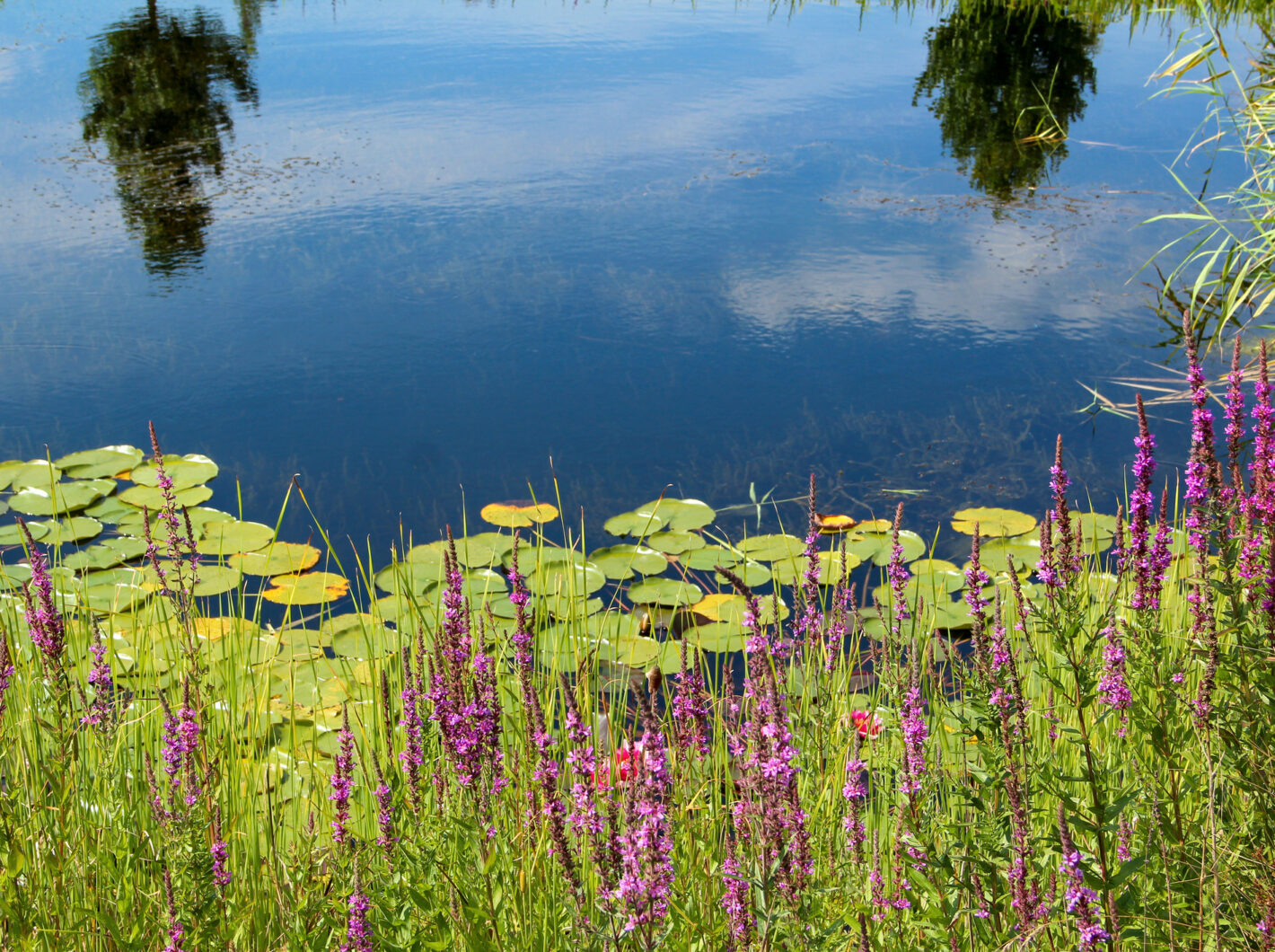
An alternative to maintaining a manicured grass pond edge is growing appropriate native vegetation around all or most (mow the area most accessed) of the pond. This would make the pond less appealing to geese, reduce maintenance costs and help to reduce nutrients in the pond that promote algae growth. Any cut vegetation should be removed and composted to prevent it from going into the pond.
Pond Banks
Repair bare spots on the pond banks regularly with an appropriate seed mix to prevent erosion and repair it immediately. Minor
erosion can be repaired by filling with topsoil and spreading seed to grow soil-stabilizing plants. Erosion control (e.g. straw) may need to be added to prevent the soil from washing away before the plants can get established. Also look for muskrat or prairie dog holes in the bank.
Land Owner Practices
Streets, sidewalks, driveways and other hard surfaces produce runoff to the stormwater pond and affect the maintenance needs of the pond.
Lawn Care
Keep grass clippings and leaves out of the storm drains, and minimize the amount of dead vegetation that goes into the pond. Dead vegetation rots, which can result in algae growth, fish kills, and/or unpleasant odors. It also accumulates in the pond, increasing the frequency pond dredging is needed, an expensive undertaking. Fertilizers and lawn care chemicals are to be
kept off of hard surfaces. Once on a hard surface, they can wash into the pond, increasing algae growth and potentially killing fish and other aquatic organisms.
Litter/Trash
Picking up litter and trash, landowners can reduce the amount of material washed and/ or blown into the pond. Trash will become an eyesore in the pond and can plug the outflow structure of the pond.
Street Sweeping
Anything that can be done (e.g. street sweeping) to prevent dirt and other grit from entering the pond reduces pollution in the pond and decreases pond maintenance.
Automobile Maintenance
Automobile fluid leaks and spills are often hazardously washed into stormwater ponds, as is the soapy water from vehicles washed in driveways or in the street. These go into the stormwater pond, polluting the water and contributing to the pollution of neighboring creeks.
Inspections
Stormwater ponds need to be inspected on a regular basis with particular attention to the inlets and outlets. Fall, spring and after major rain events are good times to conduct inspections. It is also important to protect access to the pond for maintenance work.
Inlets
Inlet pipes can deteriorate, crack and/or break. Sediment and other material can accumulate in the pipes and should be removed.
Riprap
Rocks placed to prevent erosion can be installed improperly, allowing or even causing erosion.
Outlet Structures
The various components of outlet structures can all become clogged by sediment, algae, dead plants and/or trash. It is important to remove any material clogging these structures.